Dealing with active basement seepage after heavy rains?
Call Our Roanoke Team: (540) 555-0199
A wet basement isn’t just a minor inconvenience; it is a direct threat to your home’s structural foundation, property value, and indoor air quality. In the Roanoke Valley, local homeowners face unique subterranean challenges. High annual precipitation, melting snow runoff from the Blue Ridge Mountains, and dense regional clay soils continuously force water against below-grade concrete walls and basement slabs.
At Roanoke Basement Repair, we provide proven, permanent basement waterproofing solutions tailored to Southwestern Virginia homes. Whether you are dealing with minor wall seepage or major seasonal flooding, our custom-engineered interior drainage systems keep your basement dry, clean, and fully usable.
Why Roanoke Basements Suffer from Water Intrusion
The primary cause of basement flooding in Southwestern Virginia is a combination of geology and climate. The Roanoke region is dominated by heavy clay soils, often referred to as “expansive clay.” Unlike sandy soil that allows rain to drain rapidly, clay acts like a giant sponge—absorbing massive amounts of water during heavy rainstorms and expanding significantly against your basement walls.
This expansion triggers two highly destructive mechanisms:
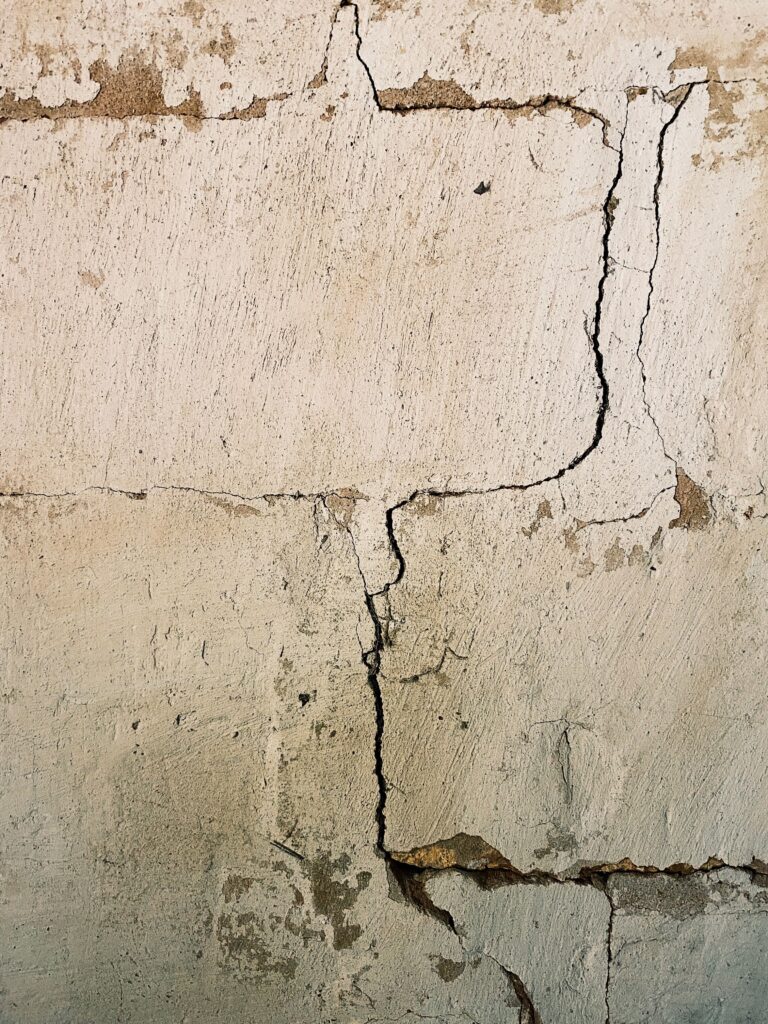
- Hydrostatic Pressure: As the clay soil around your home becomes saturated, the weight of the water exerts extreme lateral pressure on foundation walls. This forces water through hairline cracks in concrete blocks, poured concrete, and floor slabs.
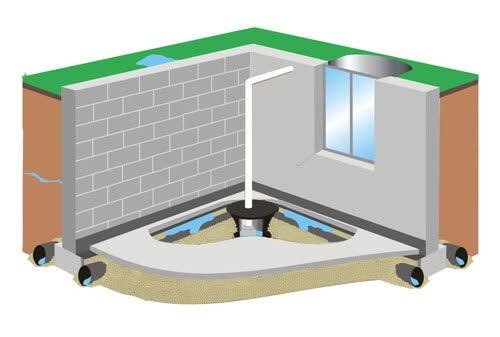
- Cove Joint Seepage: The most vulnerable part of any basement is the “cove joint”—the narrow seam where your concrete floor slab meets the foundation wall. Hydrostatic pressure easily forces groundwater up through this joint, leaving standing water along the perimeter of your basement floor.
According to hydrological studies from the U.S. Geological Survey (USGS), groundwater levels across Southwestern Virginia fluctuate drastically during seasonal rain events, making proactive subterranean drainage essential for below-grade structures.
Interior vs. Exterior Basement Waterproofing
Homeowners often ask whether interior or exterior waterproofing is the best approach. While exterior excavation can be effective during initial home construction, retrofitting an exterior system on an existing home requires digging up lawns, driveways, decks, and landscaping. An interior drainage system combined with a high-capacity pump system is the most cost-effective, non-disruptive, and reliable solution for established homes.
| Feature | Interior Drain Tile System | Exterior Excavation |
| Disruption to Property | Minimal (Work contained inside basement) | Severe (Excavation around home perimeter) |
| Installation Time | 1 to 3 Days | 1 to 2 Weeks |
| Cost Efficiency | Highly Cost-Effective | Extremely Expensive |
| Primary Function | Relieves hydrostatic pressure at cove joint | Outer barrier against surface soil moisture |
| Weather Limitations | Installed year-round | Dependent on ground condition/weather |
Our 4-Step Basement Waterproofing System
We don’t rely on temporary “waterproof paints” or surface sealers that peel off over time. We engineer complete interior waterproofing systems designed to protect your home permanently:
1. Perimeter Trenching & Sub-Slab Excavation
We carefully open a narrow channel in the concrete floor along the perimeter of your basement walls, exposing the foundation footer where water naturally accumulates.
2. Heavy-Duty Drain Tile Installation
We lay perforated, filter-wrapped drain tile pipe into a crushed gravel bed inside the trench. This creates a permanent channel that intercepts rising groundwater before it ever touches your basement floor.
3. Integrated Wall Vapor Barrier & Drainage Board
We attach a heavy-duty, dimpled vapor barrier to the interior foundation walls. Any seepage entering through wall cracks or hollow block cores flows harmlessly behind the membrane down into the perimeter drain line.
4. High-Performance Discharge via Sump System
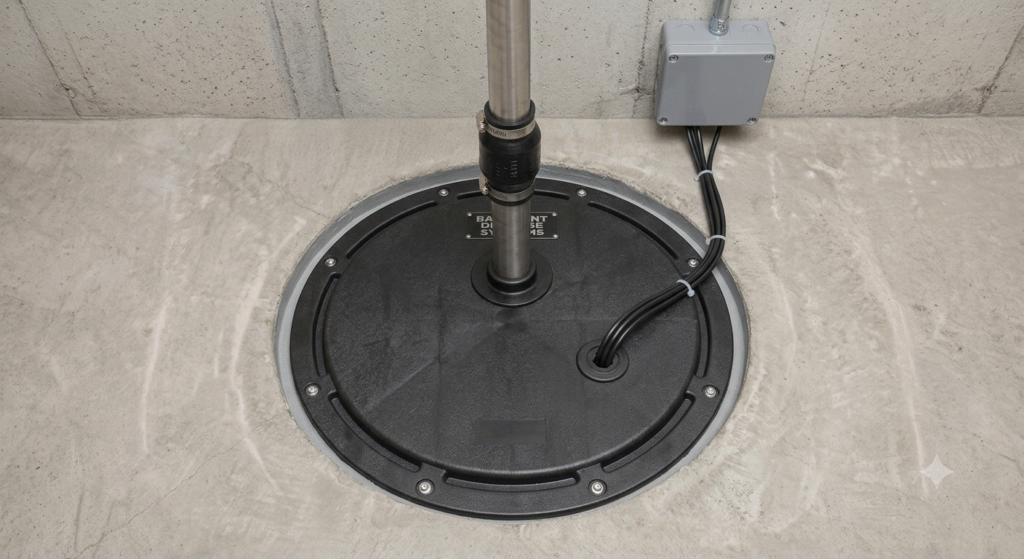
The drain tile pipe directs collected water directly into a high-capacity sump pit. From there, an automatic sump pump installation pumps the water safely up and away from your home’s foundation. If your home also features a low-clearance crawl space adjoining the basement, we integrate comprehensive crawl space encapsulation to ensure 100% moisture protection across the entire footprint.
5 Signs Your Basement Has a Hidden Water Problem
Water intrusion doesn’t always show up as a dramatic flood. Watch out for these subtle indicators of foundation moisture:
- Efflorescence: A white, chalky powder on masonry walls left behind when water evaporates through concrete.
- Musty Odors: A persistent damp smell caused by active mold or mildew growing behind drywall, rim joists, or under carpet. The Environmental Protection Agency (EPA) warns that basement moisture quickly fuels indoor allergens and airborne spores.
- Peeling Paint or Rusting Metal: Flaking wall paint or rusted appliance bases indicate high ambient relative humidity.
- Drywall Stains & Rot: Dark rings or soft spots near the base of finished basement walls.
- Floor Cracks with Seepage: Water trickling or pooling around slab cracks after spring and summer storms.
Serving the Entire Roanoke Valley Region
We provide professional basement waterproofing and foundation repair services throughout Southwestern Virginia, including:
- Roanoke, Salem, and Vinton
- Cave Spring and Hollins
- Daleville and Troutville
- Bedford and Rocky Mount
- Boones Mill and Smith Mountain Lake
Protect your structural foundation, increase your usable living space, and safeguard your home’s equity. Contact Roanoke Basement Repair today to schedule your free, on-site basement inspection and custom waterproofing estimate.
Basement waterproofing in Roanoke, VA typically costs between $2,500 and $8,000, depending on basement square footage, water intrusion severity, and pump requirements. Most interior drain tile installations average $4,000 to $6,000. Factors like slab concrete thickness and electrical upgrades for sump pumps influence final project pricing.
Interior basement waterproofing is generally better for existing homes because it is far less disruptive, significantly less expensive, and highly effective. Exterior waterproofing requires excavating landscaping, decks, and driveways around your foundation. Interior drain tile systems intercept rising groundwater directly at the cove joint and pump it away year-round.
A professionally installed interior drain tile system lasts for the lifetime of your home, typically 30 to 50+ years. Heavy-duty perforated PVC pipe embedded in washed gravel will not rot or degrade underground. Primary sump pumps connected to the system generally require simple replacement every 7 to 10 years.